
Swimming without a pace is just splashing
Most beginners swim the same way every session: get in, swim until tired, get out. Some days it feels okay, some days awful, and there's no way to tell whether you're improving or just having a good day. That's not training — that's exercise with extra chlorine.
What's in it for you: a single benchmark number turns every swim into a workout with a target. Easy sets get a ceiling, hard sets get a floor, and six weeks later you have proof — your number moved, and nobody can argue with the clock. Progress stops being a feeling and starts being a fact.
Why swimming needs its own number
Swimming is the most technique-limited of the three disciplines. On the bike and run, fitness does most of the talking; in the water, a smoother swimmer beats a fitter one at the same effort. That's why your heart-rate zones and run paces don't transfer to the pool — and why TriTrain gives swimming its own reference: your pace per 100 meters, from a timed 400m swim.
Every swim workout pace — easy, steady, hard — is described relative to that number. It's personal, it's current, and it moves when you improve.
Technique first — we mean it
Here's where we differ from the "just swim more" crowd: if you're new, the fastest gains come from skill, not yardage. Two or three short sessions a week beat one long slog, and most of that time should be technique work — body position, breathing rhythm, a relaxed catch. Fitness built on good mechanics compounds; fitness built on a struggle just rehearses the struggle.
And you don't need to be fast to set a benchmark — you need a repeatable number that describes your swimming today. Test after a few weeks of regular swimming, not on day one. A benchmark should describe swimming you can reproduce, not survival.
The benchmark test
- Warm up thoroughly — 10 minutes of easy swimming, including a few short pickups.
- Rest 1–2 minutes, then swim 400 meters as a steady time trial — strong and even, the hardest effort you could just barely hold for the whole distance.
- Record your total time. Divide by 4: that's your benchmark pace per 100m.
Why 400m? It's long enough that you can't fake it with a sprint start, and short enough to repeat every couple of months without dreading it. And why even pacing? A 400m that starts fast and dies gives you a number you can't reproduce — and a benchmark you can't reproduce isn't useful. If you faded badly, rest up and try again another day. There's no prize for a heroic blow-up; there's a training tool waiting on the other side of a well-paced swim.
Short on pool time? A timed 200m works as a rough stand-in — divide by 2 for your per-100m pace — but the 400m is steadier and worth the extra minutes when you have them.
Using the number
Once you have your benchmark pace per 100m, workouts write themselves:
- Easy / technique sets — comfortably slower than benchmark; the focus is form, not the clock.
- Steady sets — around benchmark pace; the bread and butter of triathlon swimming.
- Hard sets — faster than benchmark in short repeats with rest; this is what moves the number.
One thing to internalize: the number only means something against itself. A benchmark of 2:10/100m isn't good or bad — it's a starting point. What matters is the direction it moves. Compare yourself to your last test, never to the lane next to you.
What TriTrain does with your benchmark
Enter your benchmark and your swim workouts get Calculated pace targets — derived from a number you saved. Before you test, TriTrain still guides swims from effort descriptions; anything inferred from your history is labeled Estimated (provisional), and anything it can't establish shows as Missing rather than a guess dressed up as a fact.
Why we're different: plenty of apps will invent a pace for you and never say where it came from. We'd rather show a gap than fill it with fiction — because a plan built on invented numbers is how athletes end up training at the wrong intensity for months.
Retest every 6–8 weeks or after a focused swim block, and update the number — your targets move with it. Test, train, retest. That's the whole loop.
One more thing: the pool isn't the race
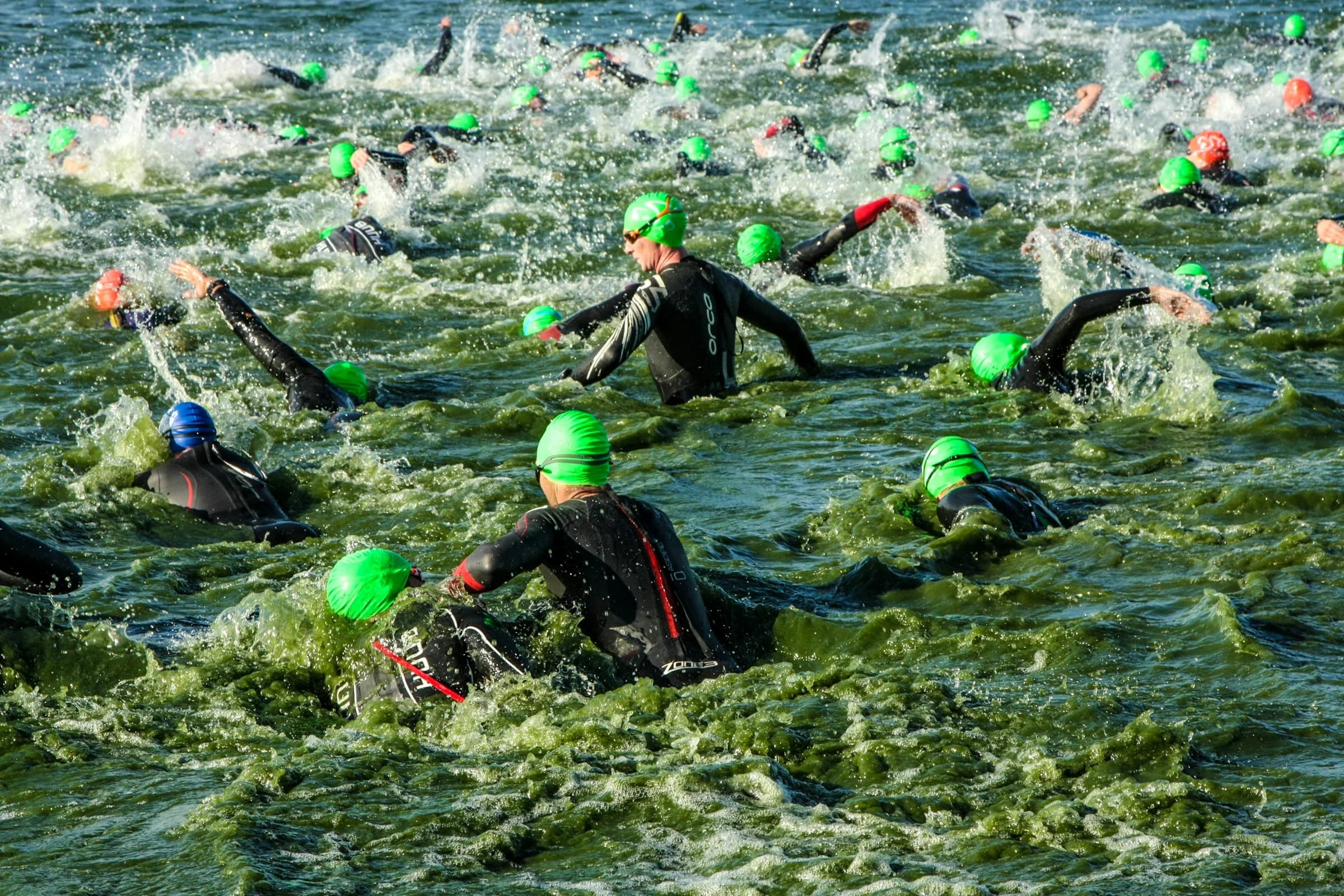
Pool fitness doesn't fully transfer to open water. Sighting, swimming straight, dealing with chop and a pack of other swimmers — these are skills, and skills need practice. Aim for at least a few open-water swims before race day, in the wetsuit you'll race in if you'll wear one. Your benchmark still applies out there; the conditions just ask more of you.
Want a plan that adapts around your life? TriTrain builds your training around your race date — swim, bike and run in one place, with recovery built in.
Frequently asked questions
I can barely swim 400m. Should I still test?
Not yet. Spend a few weeks swimming regularly with technique focus first, then test. The benchmark needs to describe swimming you can actually repeat — test too early and the number just describes survival.
Should I test in my wetsuit?
Test the way you train most: usually without. Wetsuits add buoyancy and speed, so a wetsuit test gives you a race-day number, not a training number. Train off the pool number; race-day speed is a bonus.
How does this relate to my run and bike zones?
It doesn't — deliberately. Each sport gets its own reference in TriTrain: threshold pace and heart rate for the run, FTP and threshold heart rate for the bike, and this pace benchmark for the swim. See our threshold zones guide for the full picture.
My benchmark isn't improving. What now?
Plateaus in the pool are almost always technique plateaus. Before adding volume, get eyes on your stroke — a single coached session or video analysis often unlocks what months of extra laps won't.